When Your Heat Stops Working in Charlottesville
A cold house on a freezing Charlottesville morning is more than uncomfortable—it’s an urgent situation. If you’re facing emergency no heat charlottesville va conditions, you need to act fast. With January lows averaging 29°F, a heating system failure can quickly become a health and safety risk, leading to potential frozen pipes and water damage.
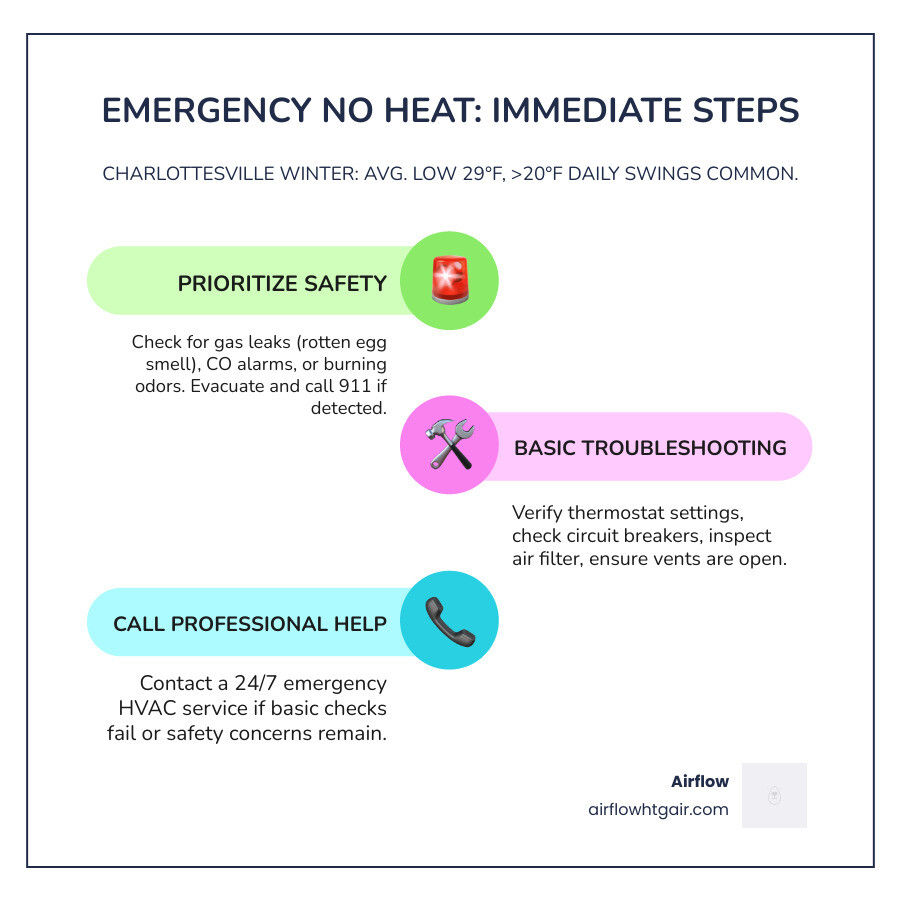
Immediate Steps for Emergency No Heat:
- Check for safety hazards – A gas smell, carbon monoxide alarm, or burning odors mean evacuate immediately and call 911.
- Verify thermostat – Confirm it’s set to “Heat” and the temperature is higher than the room’s temperature.
- Check circuit breakers – Look for tripped breakers at your electrical panel.
- Inspect air filter – A clogged filter can cause a system shutdown.
- Call a professional – If basic checks don’t restore heat, contact a 24/7 emergency HVAC service.
For comprehensive HVAC solutions and preventative care, explore our full range of services, or if you need immediate help, contact our emergency repair team.
A malfunctioning system during cold weather can lead to serious health risks, especially for vulnerable individuals. This guide covers critical safety checks, simple troubleshooting, and when to call for professional emergency heating repair in Charlottesville.
First Response: Critical Safety Steps for a No-Heat Emergency
When your heat stops, check for safety hazards before troubleshooting. A cold house is uncomfortable, but some heating emergencies are dangerous.
Gas leaks are the most urgent concern for gas furnaces. Natural gas has a distinct rotten-egg smell for leak detection. If you smell it or hear hissing near gas lines, evacuate immediately. Do not investigate.
Once safely outside, call 911 first. Then contact Charlottesville Gas Dispatch at 434-970-3800 or 434-293-9164. This 24/7 line is for gas emergencies. While you are responsible for internal lines, let professionals determine the source of a gas leak for your safety. You’ll find additional information on the city’s Gas Services & Information page.
Carbon monoxide (CO) is another serious threat. This invisible, odorless gas can be produced by any fuel-burning appliance. CO detectors are lifesavers; if your alarm sounds, treat it as a real emergency.
CO poisoning symptoms mimic the flu: dizziness, headache, confusion, nausea, vomiting, chest pain, and weakness. If your CO alarm sounds or anyone has these symptoms, evacuate immediately, get to fresh air, and call 911 from outside. Don’t re-enter until responders clear the building. The Charlottesville Fire Marshal provides valuable information about CO safety.
Electrical problems are also critical. Burning smells, sparks, or repeatedly tripping breakers signal electrical hazards. If you see these signs, turn off the system at the thermostat and the main power switch.
Don’t keep resetting a breaker if it trips again—this indicates a dangerous fault. These issues require professional attention.
Once you’ve confirmed there are no immediate safety hazards, you can move on to basic troubleshooting. But if anything feels unsafe, trust your instincts and call for help.
Before You Call: A Homeowner’s 5-Step Troubleshooting Checklist
After ruling out safety dangers, try these simple troubleshooting steps. A quick fix could resolve your emergency no heat charlottesville va situation, saving you time and worry.
-
Check Your Thermostat Settings: This is a common culprit. Ensure your thermostat is set to “Heat” and the temperature is set higher than the room’s current temperature. Replace batteries if it has them. Check for schedule overrides and set the fan to “Auto,” not “On,” to avoid circulating unheated air.
-
Inspect Your Circuit Breakers and Furnace/Heat Pump Switch: Look for tripped breakers in your electrical panel. Reset the furnace or heat pump breaker once. If it trips again, call a professional. Also, ensure the power switch near the unit (often resembling a light switch) is in the “On” position.
-
Check Your Air Filter: A clogged air filter is a top cause of system failure. It restricts airflow, causing overheating and shutdown. Inspect your filter; if it’s dirty, replace it. Check filters every 1-3 months during peak season.
-
Make Sure Vents and Registers Are Open: Your heating system needs clear pathways to distribute warm air. Walk through your home and ensure all supply and return vents are open and not blocked by furniture, rugs, or other items.
-
Check Your Fuel Level (For Oil or Propane Heat): If you have an oil or propane furnace, check your fuel tank’s gauge. Running out of fuel is a simple but common reason for a no-heat situation. If the tank is low or empty, call your fuel provider.
If these checks don’t resolve the issue and your home is still cold, it’s time to call in the experts.
When to Call for Emergency No Heat Repair in Charlottesville, VA
Knowing when to stop DIY troubleshooting and call a professional is crucial, especially in Charlottesville’s cold winters. Continuing on your own can waste time or create safety hazards.
If troubleshooting fails and your home is still cold, it’s time to call for emergency no heat charlottesville va service. Specific warning signs also demand immediate professional attention.
Signs You Need an emergency no heat charlottesville va professional
If your system won’t turn on after checking the basics (thermostat, breakers, power switch), a deeper issue like a failed ignition system or control board is likely. This requires professional diagnosis.
Loud banging or grinding noises are alarm bells for critical mechanical failure, such as a failing blower motor or worn-out bearings. These problems require immediate attention and will only get worse.
Burning or metallic odors (after the initial seasonal dust burn-off) signal trouble like overheating electrical parts or motor problems. Turn off your system and call for help immediately. For furnace-specific issues, our furnace repair team can quickly find the root of the problem.
Feeling cold air from vents means your system is using energy without producing heat. This could be a faulty heating element, thermostat issue, or a refrigerant problem in a heat pump. Don’t wait to call for service.
For gas furnaces, a yellow pilot light that is weak or flickering indicates incomplete combustion, which produces carbon monoxide. This requires immediate professional attention.
Frequent cycling—when your heat turns on and off constantly without warming your home—puts a strain on your system and points to an underlying problem.
Water leaks near your unit can cause corrosion and property damage, indicating serious internal problems like a clogged drain or cracked heat exchanger.
If you see ice on your heat pump beyond a light frost, it could be a refrigerant leak or defrost control failure. Our heat pump repairs specialists can diagnose the issue.
What to Expect from an Emergency Service Call
When you call Airflow for an emergency no heat charlottesville va situation, you need peace of mind. We offer 24/7 availability because HVAC systems don’t follow business hours, and your family’s safety is our priority.
Our prompt response prioritizes no-heat emergencies, especially during extreme cold when every hour matters.
Our certified technician will perform a thorough system diagnosis to find the exact cause of the failure. We provide an upfront explanation of the problem and the required solution in plain language.
Our service trucks are stocked with common parts, allowing for professional repairs in a single visit. Afterward, we conduct system testing to ensure everything is working safely and efficiently, so you can be confident your home will stay warm.
For all your heating and cooling needs, explore our full range of Services. We’re here to keep your home comfortable year-round.
Understanding Common Heating Failures and How to Prevent Them
Understanding why heating systems fail can help you prevent an emergency no heat charlottesville va crisis. Spotting warning signs early allows you to take action before you’re left in the cold.
Most breakdowns give warning signs. Mechanical wear and tear is inevitable for systems with moving parts like motors, belts, and bearings. Your system works hard during Charlottesville winters, and that effort takes a toll.
Ignition system failure is another common issue. If an electronic ignitor or pilot light can’t ignite the fuel, the system can’t produce heat.
The blower motor pushes warm air through your ducts. If it fails, the heat stays trapped in the unit, and you won’t feel warm air from the vents.
For gas furnaces, thermocouple problems are a frequent issue. This safety device shuts off the gas supply if it senses the pilot light is out, but a malfunction can shut the system down unnecessarily.
A clogged air filter can cause your system to overheat and shut down. This is one of the most common yet easily preventable causes of service calls.
Thermostat malfunctions can prevent your heating system from getting the signal to run, even if the system itself is fine.
The best defense is regular maintenance. Just as your car needs oil changes, your heating system needs preventative care. Our maintenance services are designed to catch small problems before they become emergencies.
Regular maintenance helps spot worn components before they fail, improves efficiency to lower energy bills, extends your system’s lifespan, and detects safety hazards like carbon monoxide leaks.
Common causes of an emergency no heat charlottesville va situation
Furnace issues can be serious. A cracked heat exchanger can leak carbon monoxide into your home. Dirty flame sensors and clogged condensate lines in high-efficiency models are also common culprits for shutdowns.
Heat pump problems can affect you year-round. Common issues include refrigerant leaks that reduce heating capacity, compressor failure, a stuck reversing valve (which switches between heating and cooling), and defrost cycle problems that can encase the outdoor unit in ice. Our heat pump repairs team knows these systems inside and out.
For homes with boiler malfunctions, issues often involve the water system. Low boiler pressure, a leaking tank, or frozen condensate piping can shut the system down. Air trapped in the lines can also prevent radiators from heating up.
Geothermal systems, while efficient, require specialized knowledge for repairs involving pumps, heat exchangers, or the underground loop system.
No matter your system, regular maintenance is the smartest way to prevent a breakdown. When an emergency does happen, you can count on Airflow’s professionals to restore your heat quickly and safely.
Financial Help for Heating Crises in Charlottesville
An emergency no heat charlottesville va situation brings financial stress along with the cold. If you’re struggling to afford repairs, know that help is available in our community.
Virginia’s Energy Assistance Program (EAP) is a federally funded program for households facing heating emergencies. The Crisis Assistance component is for true emergencies, like broken heating equipment or an imminent utility shut-off.
Crisis Assistance can cover equipment repair or replacement, supplemental heating equipment, security deposits, or heating fuel and utility bills. It’s designed for moments when your furnace dies on a cold night.
To qualify, your household must have a heating expense and meet income requirements, typically not exceeding 150 percent of the federal poverty level. Applications for equipment-related issues are accepted from November 1 to March 15. For fuel and utility bills, you can apply from the first workday in January through March 15.
The application process is straightforward. Apply online using CommonHelp, call the Enterprise Customer Service Center at 855-635-4370, or submit a paper application to the Charlottesville Department of Social Services at (434) 970-3451.
You can also call the Community Resource Helpline at 833-524-2904 (or 434-373-0930 for Spanish speakers) Monday-Friday, 9 AM-5 PM. They can connect you with utility bill assistance and other resources.
These programs exist because no one in our community should have to choose between heat and other necessities. If you’re facing a heating emergency and money is tight, these resources are here for you.
Frequently Asked Questions about Heating Emergencies
When your heat goes out, we know you have questions. Here are answers to common concerns we hear during emergency no heat charlottesville va situations.
How fast is the response for an emergency heating call in Charlottesville?
We treat no-heat calls as a top priority. Our goal is to dispatch a certified technician as quickly as possible. While response times vary based on conditions and call volume, we operate 24/7 to ensure you’re not left waiting. When you call Airflow, you connect with a team that cares about your safety. We work diligently to dispatch help quickly, especially on cold winter nights.
Is it safe to use space heaters until my furnace is fixed?
Space heaters are a helpful temporary fix if used with caution. Place them on a stable, flat surface and maintain a three-foot clearance from all flammable items like curtains, blankets, and furniture.
Never leave a space heater running unattended or while you sleep. Plug them directly into a wall outlet, not an extension cord, to prevent overheating. Most importantly, never use a gas oven or range to heat your home. This is extremely dangerous and can cause carbon monoxide poisoning. Properly used space heaters are your safest option until we can repair your system.
Why is my heat pump blowing cool air?
Heat pump owners often ask this. Unlike furnaces, heat pumps transfer warmth, so the air from vents feels less hot—even lukewarm—while still warming your home.
On cold days, your heat pump may run a normal defrost cycle to melt ice from the outdoor coil. You might see steam or hear whooshing sounds, which is normal. During this cycle, your system’s auxiliary heat strips should activate to maintain warmth.
However, if your house doesn’t warm up or the air from vents stays cold after the cycle, something is wrong. It could be a faulty defrost mechanism, an issue with the auxiliary heat, or a refrigerant leak. In these cases, it’s time to call for professional service to diagnose the problem.
Conclusion
When your heat goes out, don’t panic. Remember: safety comes first. Check for gas leaks, CO alarms, and electrical issues. After ensuring safety, simple troubleshooting of your thermostat, breakers, and filter might solve the problem.
If basic checks fail or you notice serious signs like loud banging noises, burning smells, or cold air from your vents, it’s time to call an expert. This is the smart way to protect your home, family, and heating system from further damage.
An emergency no heat charlottesville va situation is more than an inconvenience; it’s a risk to your home and health. Getting professional help quickly is essential. If finances are a concern, community resources like the Virginia Energy Assistance Program can help.
For trusted, 24/7 emergency repairs and maintenance in Charlottesville and Central Virginia, rely on the certified professionals at Airflow. We’re committed to being there when you need us most. Don’t let the cold take over. Explore our full range of HVAC Services and let us keep your home warm and safe.